
Stripping Away Shoot Friction to Keep Real Craft Rolling
If you are producing content right now, it can feel like you are running flat-out in heavy winter gear.
Between tightening margins, shifting tax-credit caps, shrinking institutional subsidies, and the constant chatter about how AI will enable us to produce more for less, it is easy to get caught up in the race for pure speed and efficiency. But speed without direction isn’t a strategy. As a compelling industry viewpoint recently put it, technology and smart workflows should be the support act, never the headline. Nobody looks back proudly on a project simply because it was cheap; they remember the work that captured something genuinely human, rooted in a clear creative vision.
To get there, we have to shed the right layers.
That doesn’t mean stripping away craft or human instinct—it means stripping away the logistical friction and operational drag that bury producers in chaos instead of letting them lead on set. It’s why PSN was built as a direct extension of your own production team. Instead of building local infrastructure from scratch or wrestling with unfamiliar regional nuances alone, you can plug straight into our vetted, independent service partners across the globe who already know the terrain, the rebates, and the crews inside and out. When you remove that logistical weight, you buy back the time and creative headroom that actually matter.
Below, we’ve rounded up the screen industry news that caught our eye this month—from the latest debates on film funding and IP rights to how creators are protecting genuine human craft in an increasingly synthetic world.
Dive into the stories shaping our industry, and when your next project needs a lean, grounded path to bringing a big vision to life anywhere on the map, reach out to connect directly with our local partners.
FILM AND TELEVISION
Hollywood Coalition Calls For Streamers To Spend Half Their Content Budget On Indies
“‘As film and television increasingly consolidate, we need a regulatory framework that puts creators first, protects industry workers and preserves competition.’ U.S. entertainment jobs are ‘at risk of collapse due to an imbalance of power in the U.S. Film and Television industry.’” (Variety)
IP Rights Battle Looms In Hollywood
“There’s no incentive for the creators to go out and build something brand new. That’s why they’re only making sequels and franchise titles. They own those and have no motivation to say ‘Why don’t we do something new?’” (Variety)
California Incentive Fails to Jump Start Production
“We’re disappointed to see the numbers down overall. The fact remains that work that does not receive incentive support is increasingly likely to leave California for places that are more affordable.” (Variety)
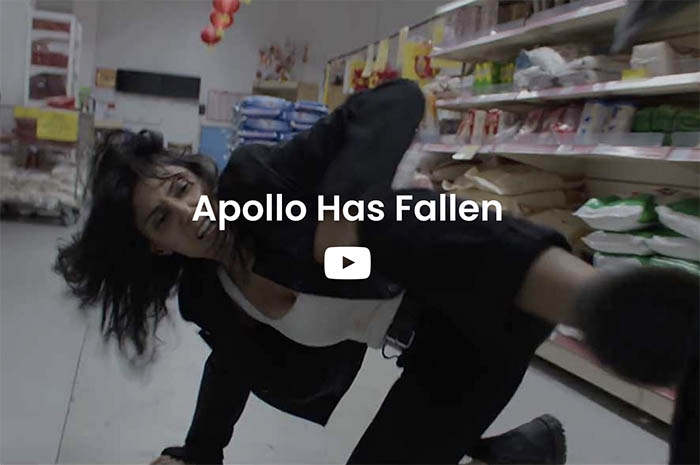
Award-Worthy Microdramas Earn Industry Recognition
“It’s an extremely cheap, extremely fast way to test which genres, tropes and even actors actually connect with an audience before anyone commits a theatrical or premium TV budget to them. It is a proving ground for cinema and TV alike, and an early-warning signal for what audiences want next.” (Screen Daily)
Cracking The Vertical Medium: Beyond the Microdrama Business Model
“What does this screen, in this room, watched this way, do that the other screens can’t? Answer that in a story. If you do, the economics will reorganize around you, because they always have. If you don’t, no amount of cost reduction saves the piece, AI or otherwise, because a cheap thing nobody wanted is still a thing nobody wanted.” (Corser)
One Story, Two Mediums. Dissecting The Vertical
“Everything the frame touches changed, which turns out to be framing, omission, editing rhythm and performance calibration, and everything the frame doesn’t touch stayed the same. Vertical is a medium with its own grammar. It is not a lesser cinema and it is not a different art. The craft carries over. The choices don’t.” (Corser)
Entertainment Ranked Second Most Valuable Sector
“As AI ‘transforms how entertainment is created, distributed and consumed, technology alone will be an increasingly weaker source of differentiation. Brands that win will be those that understand the role of brand in driving choice, identify new arenas for growth, and consistently give people reasons to come back, creating habits, not just moments.’” (Deadline)
Risks And Opportunities of AI Filmmaking Revealed By Pioneering Korean Creatives
“‘AI companies are all losing money and are keeping prices low as a marketing play. If they raise token costs roughly tenfold, it could go above what the films we’re shooting now cost. The final budget comes down to how few rounds of revisions there are. In the end, I think that human 5% decides the quality.” (Variety)
ADVERTISING

How Brands Can Board Instagram’s Push Into Long-Form
“Instagram is coming for your TV. In the span of a week, Instagram started testing Features, a format for horizontal videos up to 90 minutes long, and brought its TV app to Apple TV. Put together, the two launches build the most direct path Instagram has ever had from a phone screen to the couch.” (Later)

Baseline Assumptions To Build The Future We Want
“Work rooted in a genuine point of view performs. With the right technology behind it, it can now perform in more places and more markets than ever. I’m not anti-technology. I’m just very clear that technology is the support act here, not the headline.” (LBB)

FUNDING
Aussie Producers Step Up Calls For Removal Of 20% Cap On Key Tax Rebate
“The 40% Producer Offset demands above-the-line costs are just 20% of the total budget. It’s folly to think you’re going to raise finance for great IP, a recognised director and star cast and keep these costs within 20 per cent, but these three elements of creative excellence are what the market expects.” (Screen Global Production)
Industry Resistance To Slashing European Film Funds
“Predictable funding is essential to sustaining European independent production, enabling works to circulate across borders and strengthening the sector’s international competitiveness as it navigates the digital and environmental transitions. The proposed cuts conflict with the Council’s own conclusions on the strategic role of culture, cultural heritage and audiovisual works in upholding European values and democratic resilience” (Cineuropa)
Incentives Don’t Reduce California Cost Of Living Impact
“A substantial independent body of research now exists that shows a slightly cheaper production is actually only a small factor in where a film or TV show shoots, among many other often potent factors like actor schedules, locational necessities and producer preferences, on what is both a psychologically and logistically complex question with no single antecedent.” (THR)
Being Human
Hollywood Is Embracing AI
“‘There’s nothing you can do about it.’ Much like the way studios and directors of the 1960s and ’70s embraced the once-taboo profanity and nudity, this year AI has found a new wave of advocates eager to go public. Part of what’s spurred this breakthrough involves creatives getting to know the technology. Some have found it additive to their projects.” (Variety)
Capturing What’s Real In An Age Of Fake Feelings
“Software can translate a stranger’s words, generate a flattering face, and produce an emotional image on demand. The cost of manufacturing a feeling is approaching zero, and what becomes scarce is provenance: what happened, with whom, under what conditions.” (Shot
The Imperfect Advantage
“After decades of making advertising feel more human, we’ve reached a point where even ‘human’ can be manufactured. So perhaps the answer is to give audiences more reasons to believe that they are real because when everything can be made perfect, a beautiful mess might just be the most convincing proof that a human was here.” (Shots)
UK Industry Subject To New Anti-Harrassment Law
“‘This is a significant change. As an employer, you can’t now say, ‘I can’t control what other people do.’ You have to take responsibility. And the duty of care reaches beyond the set.” (Deadline)
Just The FAQs
Where is production funding facing the biggest shake-ups right now? Traditional incentives and public subsidies are hitting turbulence worldwide. California’s tax credit isn’t stopping work from migrating to more affordable hubs, Australian producers are pushing to lift a restrictive 20% above-the-line cap on their 40% Producer Offset, and European filmmakers are rallying against proposed cuts to EU cultural funds. Meanwhile, a Hollywood coalition is lobbying for streamers to dedicate half their content budgets to indie productions alongside renewed battles over creator IP rights.
How are vertical storytelling and microdramas changing production economics? Vertical formats and microdramas have evolved from cheap novelty into serious proving grounds—earning awards recognition in Asia and serving as rapid, low-cost testbeds for genres, tropes, and talent before studios commit major budgets. At the same time, Instagram is pushing into horizontal long-form video (up to 90 minutes) alongside a new Apple TV app, giving brands a direct path from mobile screens to the living room.
What is the real takeaway on AI in filmmaking right now? While Hollywood is increasingly adopting AI tools, pioneering AI filmmakers warn that token costs could eventually climb higher than traditional 35mm shoots if revisions spiral out of control—and that the final “human 5%” is what actually determines quality. Industry leaders agree that as synthetic imagery becomes cheap and ubiquitous, genuine human provenance, emotional imperfection, and strong brand identity are what actually make work stand out.
Are there any new on-set compliance rules producers need on their radar? Yes—particularly in the UK, where new anti-harassment legislation expands employer liability, making production companies directly responsible for taking proactive duty-of-care measures that extend beyond the physical set.